A Better Score Tracker for Flip 7
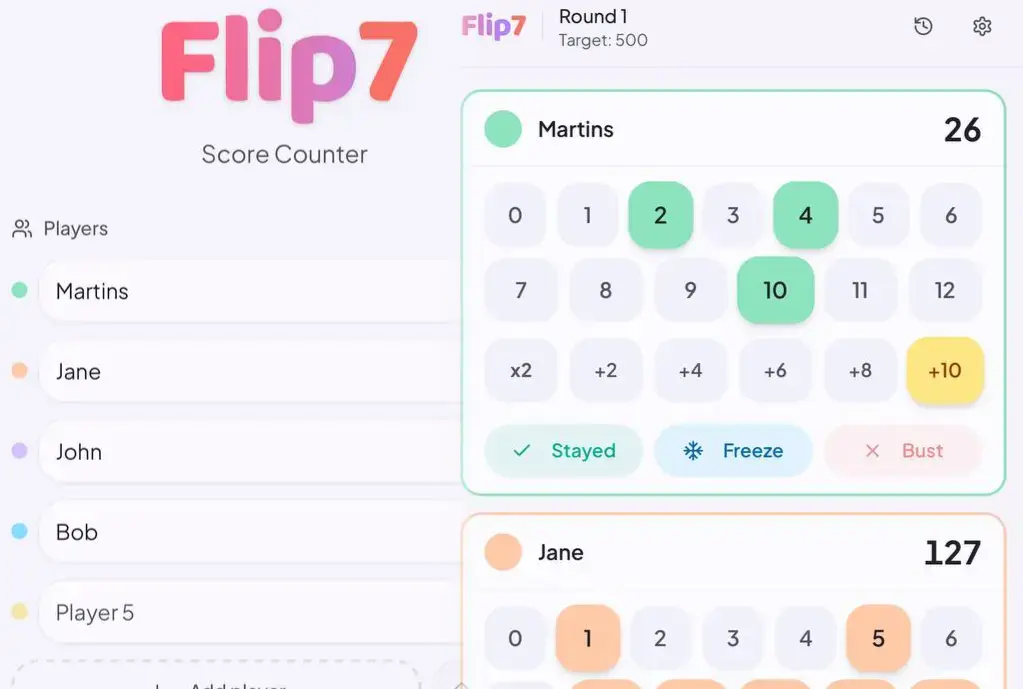
Recently, I was recommended Flip 7 - a fast, tense, and brilliant card game that’s also kid-friendly. As the father of a five-year-old, I can safely say we’ve had a lot of joy out of it.
Without going too deeply into the mechanics, the goal is simple: score the most points, without letting scorekeeping slow the game down. After using the official Flip 7 score tracker a few times, it became clear that while it works, it feels rough around the edges, more like a digital version of a paper scorepad than a companion to the game.
So that’s why I decided to build something better.
Limitations of the original score app
The official tracker covers the basics, but it comes with a few limitations that make live games harder than they need to be:
- Scoring is handled through a single round-total input per player.
- There’s no real validation or structure, so you can enter pretty much any number, up to 999.
- Player management is minimal, just initials.
- The interface feels more like a form than part of the game.
In short, it works.
It just doesn’t really help.
You might as well use pen and paper.
A score tracker designed for the table
I built this Flip 7 score tracker to feel like a natural extension of the game itself. Instead of entering a round total, you track the cards each player actually plays:
- Tap number cards and modifiers as they appear (or after the round finishes).
- Flip 7 is detected automatically and the +15 bonus applied for you.
- End a player’s round with Stayed, Freeze, or Bust.
- Once a round ends, that player’s score is locked and clearly marked.
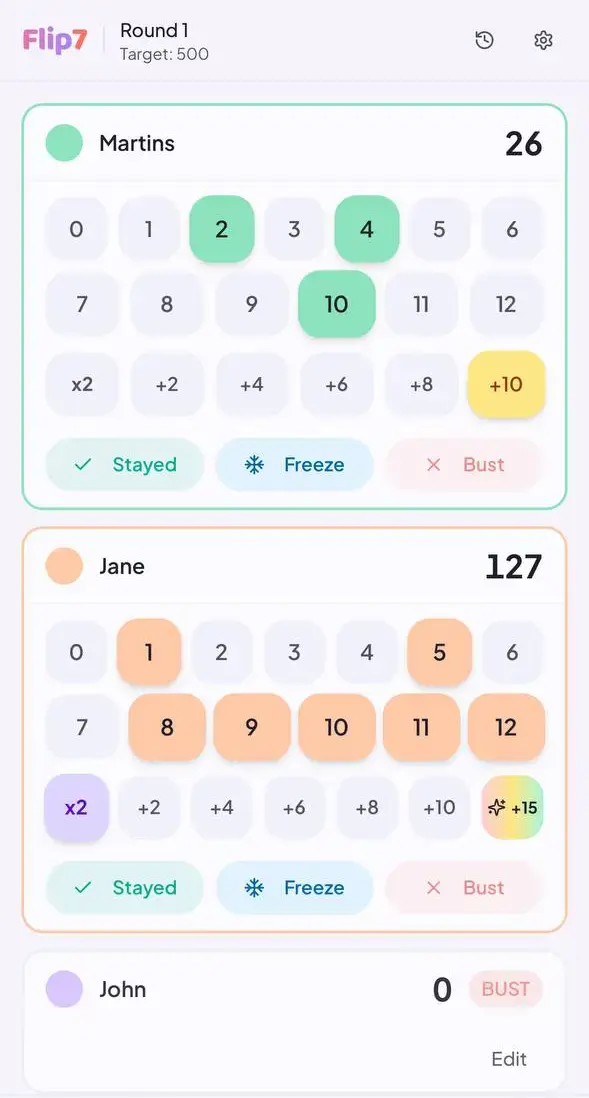
Scoring becomes faster, clearer, and much harder to mess up mid-game.
Designed for speed, clarity, and everyone at the table
I didn’t want a score tracker that felt like admin. Game night shouldn’t pause while someone squints at numbers or double-checks the maths.
So I built it so you never type scores at all. You play the cards, tap what happened, and the app handles the calculations in the background. The focus stays on the table, not the screen.
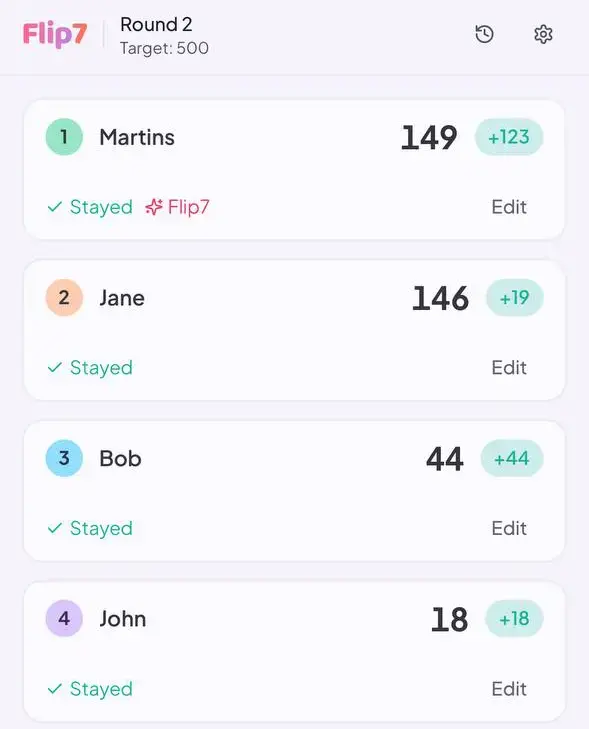
A lot of the design ideas came from actually playing the game:
- I kept the layout clean and visual so even younger players can follow along and help keep track, mine absolutely loves being “in charge” of the scores.
- Players are automatically sorted by score between rounds, so you instantly see who’s leading without scanning a list.
- I stripped away unnecessary numbers. You don’t need a wall of stats mid-game, just the totals that matter.
It’s built to be glanced at, not studied.
More flexibility, less friction.
While I was building it, I also added a few things I always wished the original tracker had.
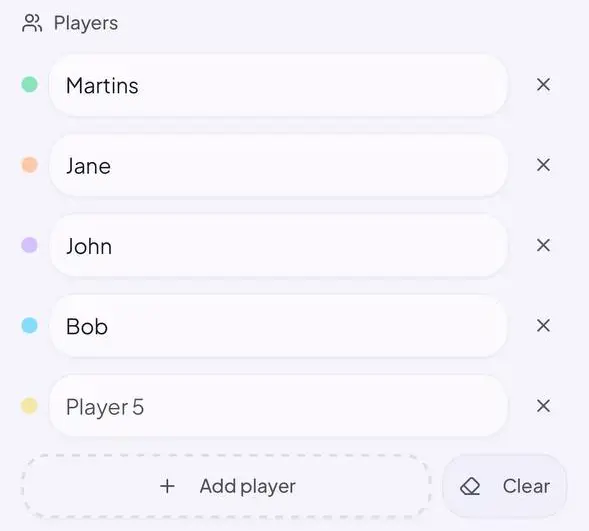
Setting up a game should take seconds, not a ritual. Add your players once and they’re remembered on your device. New person joining? Add them. Different group tonight? Clear the list and start fresh.
Then you choose how this game ends.
Some games are a quick sprint before everyone heads home. Others somehow turn into “just one more” long after they probably shouldn’t. So I made it easy to start fast and stretch the game when you need to.
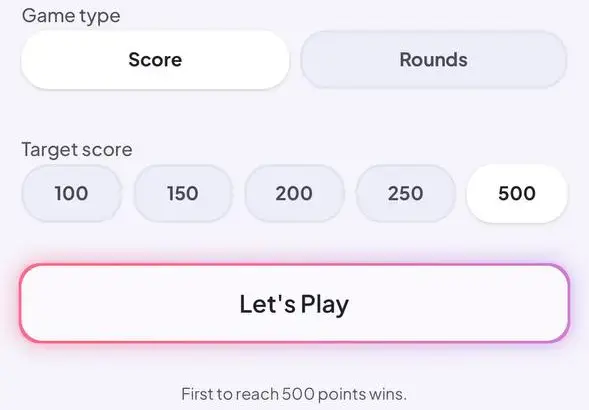
Play to a target score when you want a clear finish line and a tidy end. Or switch to a set number of rounds if the table’s not ready to stop yet, even if it’s technically past someone’s bedtime.
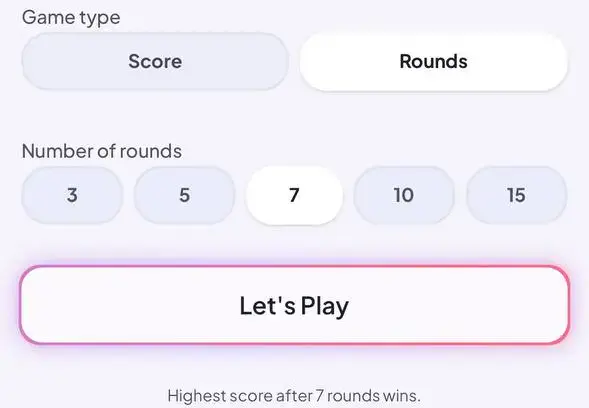
No fiddling with settings, no restarting from scratch. Just pick how long tonight’s game feels like it should last, and get on with playing.
No accounts to create. No ads cluttering the screen. No tracking ticking away in the background.
Currently free to use, because I still think good things can just be free.
A simple side project, built for fun
This app came together over a few spare hours, a chance to build something playful and a bit different from my day-to-day work.
It’s built with Next.js and shadcn/ui, deployed on GitHub Pages, and designed to stay out of your way while you enjoy the game.
If you play Flip 7 and want scorekeeping to disappear into the background, this one’s for you.
Check out on https://flip7.peachy.tools.
Happy flipping ✨